DX9 Sysex Converter is a Windows application that can bulk convert other 4 Operator Yamaha FM patch files to the DX9
It can read DX100, DX21, DX27, DX11 and TX81Z Sysex files and convert them to the DX9. It handles both single and bulk patch dumps and allows for multiple files to be converted at once.
It splits each bulk patch file into two files of 20 patches each and generates a text file with the corresponding name of each patch.
The development of this application was in part based on information from the following sources:
Yala's "FM DX Supplement" Page
Yamaha DX7/9/100 and TX81Z Manuals
Matt Gregory's TX81Z Page
Martin Tarenskeen's DXConvert
The 64bit, x86 binary and sources can be downloaded from the Downloads page. In addition, the source is available on GitHub
Quick Start Guide

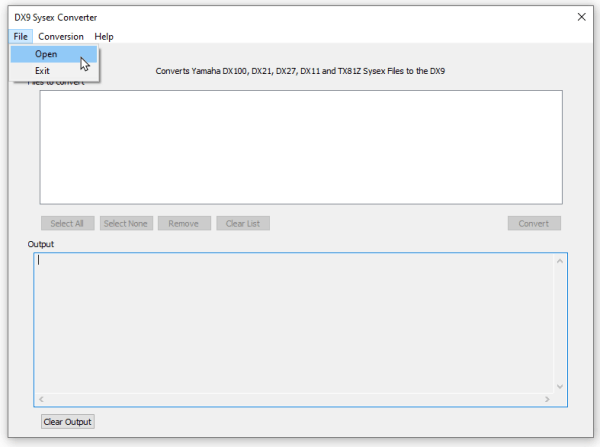
The operation of DX9 Sysex Converter is fairly straightforward, start by selecting File->Open from the menu

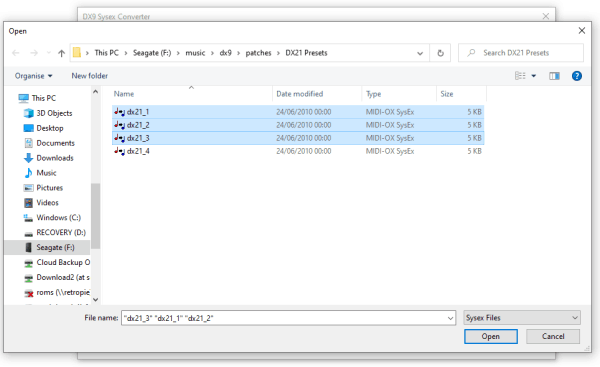
A file select dialog will appear, you can select 1 or multiple files from this dialog. Once you've selected all the files you want, hit "Open"

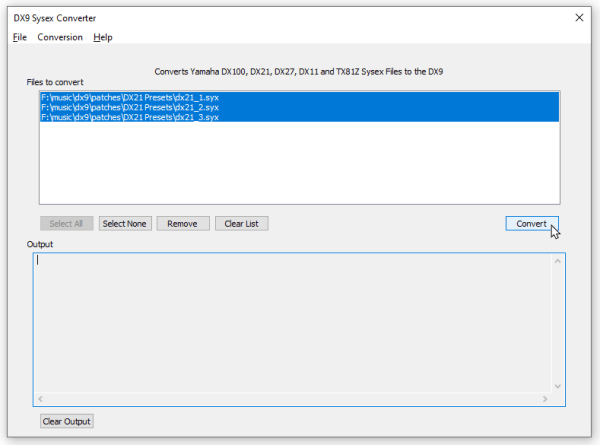
Each of the 'opened' files will get added to the "Files to convert" list and you can repeat the previous steps to add files to this list if needed. You can also remove files from the list by highlighting them and hitting 'Remove'. To convert. highlight the files in the list you want (by default all files you 'open' will be selected), then, press the 'Convert Button'

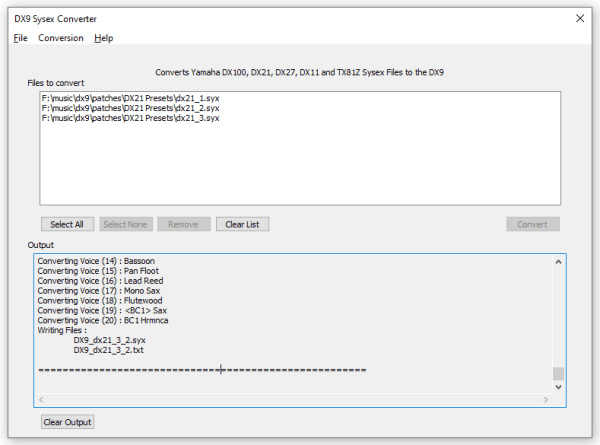
The selected files will be converted and written out in the same directory as the source file, all written files will have an added "DX9_" prefix and in addition there will be matching text files generated containing the list of patch names in the converted Sysex file
So, are all the patches converted perfectly?
For the most part, there is little to no difference but for some patches there will be discrepancies. The most obvious differences will be in the '2nd Generation' 4Op patches from the DX11 / TX81Z. These later 4Op synths allowed waves other than sine waves to be used by operators which cannot be converted back to the DX9. The second place where differences will become more evident is in patches that use extreme settings, especially noticeable in 'special effect' or 'sound effect' patches. Mapping and conversion of the various parameter values are based on tables that work well in the 'usual range' but undoubtedly become less accurate towards the extremes as there has been less tuning and testing at these settings.
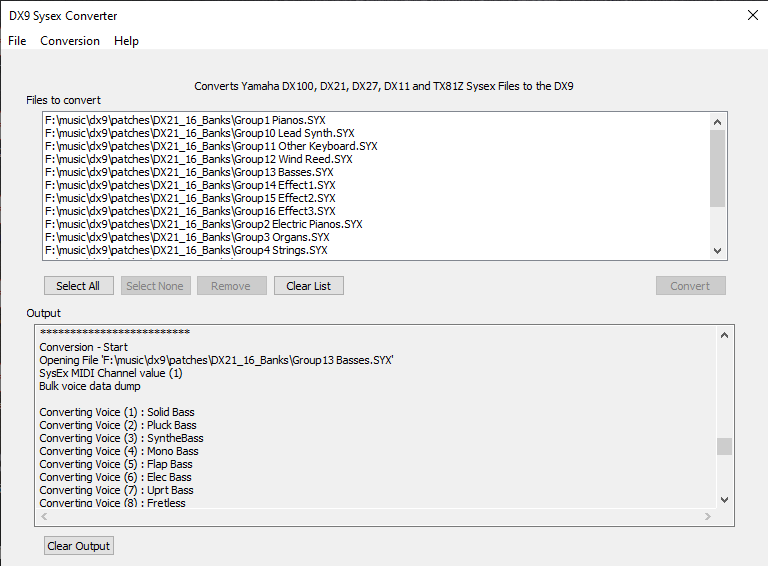
The conversion is pretty good - you can now play Solid Bass on your DX9 if you want to and have access to a huge library of sounds - but there will inevitably be some differences.
Having said that, this is just version 1 of the application, so if you notice any glaring issues or bugs please feel free to mail me
Why the initial DX9 data tape patches didn't match their descriptions