"The Least Complex of the DX Range"
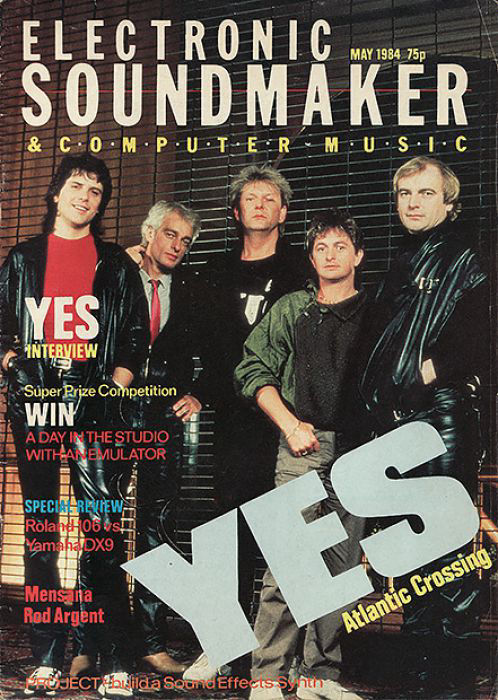
The above phrase from Wikipedia, which has since been repeated around the internet, seems to have first appeared in an Electronic SoundMaker May 1984 article (and yes that is what YES really looked like). Ironically, it was written as part of a glowing review of the DX9. It compares the DX9 to the Juno 106 and contrasts the limited sonic palette of Roland's single oscillator synth with that of the 'brave new world' of FM synthesis.
The comment itself was comparing the DX9 with the other models in the DX range as they existed in May 1984, which were the: DX1, DX7 and DX9. Patently the DX9 was the least complex of those synthesizers.
Here is the quote in full:
"The DX9 is the least complex of the DX range; it basically has less of everything compared with the slightly more expensive DX7. The irony is that whereas the Roland Juno 106 has 128 memories for a synthesiser that is by comparison very simple and whose ability to create a large variety of sounds is, again by comparison, strictly limited, the DX9 has just 20 memories on board — not nearly enough for the imagination of the average synthesis"
So, the complaint in the review was actually this - although the DX9 could produce a far wider palette of sounds than the 'simple and limited Juno 106', there were only 20 slots into which these creations could be stored.
In truth, the DX9 is one of the most powerful 4 Operator FM synths that Yamaha has produced, purely because it is really just a DX7 with 'crippled' firmware. Its initial failure was almost entirely down to price point and this was then compounded by its lack of compatibility with all subsequent 4Ops. The initial reasons for the failure of the DX9 obviously can't be changed but the subsequent incompatibility can be - by converting the later Yamaha 4Op patch libraries back to the DX9, one of the reasons for the creation of this site.
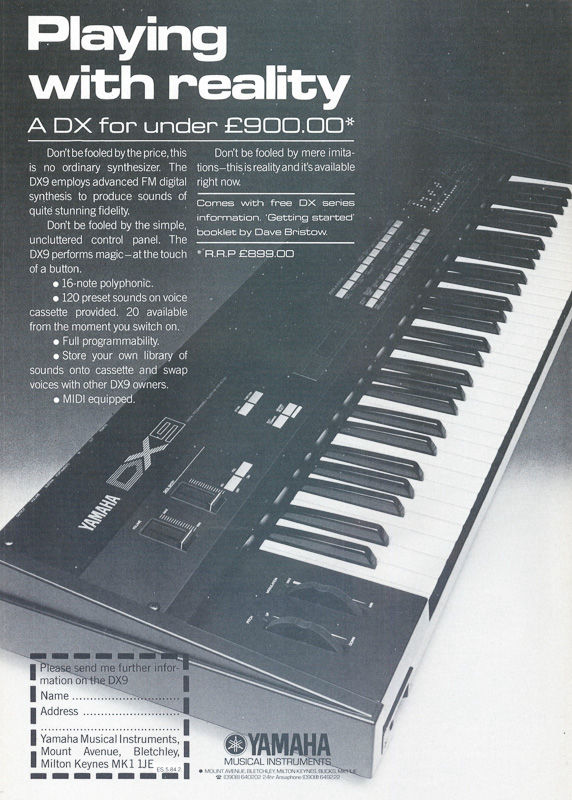
Just for reference, below is a list of the features of the DX9 that, prior to the Yamaha DX Reface, exceeded all other Yamaha 4 Operator FM synths.